
The Battle Between Rigidity and Reality: The Century-Old Paradox of “No Reissued Diplomas”
Original Diplomas,In an era where AI-driven robots perform backflips and blockchain secures global finances, a frustratingly archaic rule persists in the hallowed halls of academia: The original graduation certificate is a one-time-only artifact. Whether it is 1926 or 2026, if you lose that physical piece of paper, most universities globally—and specifically within rigid administrative systems—will not print you a new “original.” Instead, you are handed a “Graduation Proof” or “Verification Certificate.”
But why? If the Ministry of Education has digital backups and every certificate has a unique tracking number, why is reprinting a piece of cardstock treated like a violation of the laws of physics?
The Logical Fortress: Why Universities Say “No”
To understand this “anti-human” regulation, we must look past the administrative desk. There are three primary pillars supporting this rigidity:
1. The Principle of Uniqueness and Legal Solemnity
A diploma is not just a receipt; it is a legal instrument issued at a specific point in history. Universities argue that the original document carries a “timestamp” of the institution’s leadership at that moment. Reissuing an original with contemporary signatures for a degree earned a decade ago creates a chronological paradox. Furthermore, maintaining a “one degree, one paper” policy limits the circulation of multiple “originals” that could be used for identity fraud.
2. Administrative Inertia or “Lazy Governance”?
While security is the official shield, critics argue that “administrative convenience” plays a larger role. Transitioning to a secure, on-demand reprinting system requires a level of cross-departmental agility that many legacy institutions lack. It is far easier to issue a standardized “Proof of Graduation” than to recalibrate old templates, find historical watermarked paper, and verify defunct signatures.
Real-World Consequences: When “Proof” Isn’t Enough
Although a “Certification of Graduation” is legally equivalent to the original, the social reality is often different. Consider the case of “Mr. Zhang,” a tech lead who lost his 2015 diploma during a cross-city move. While applying for a high-security government contract, the “Proof of Graduation” triggered an extended background check.
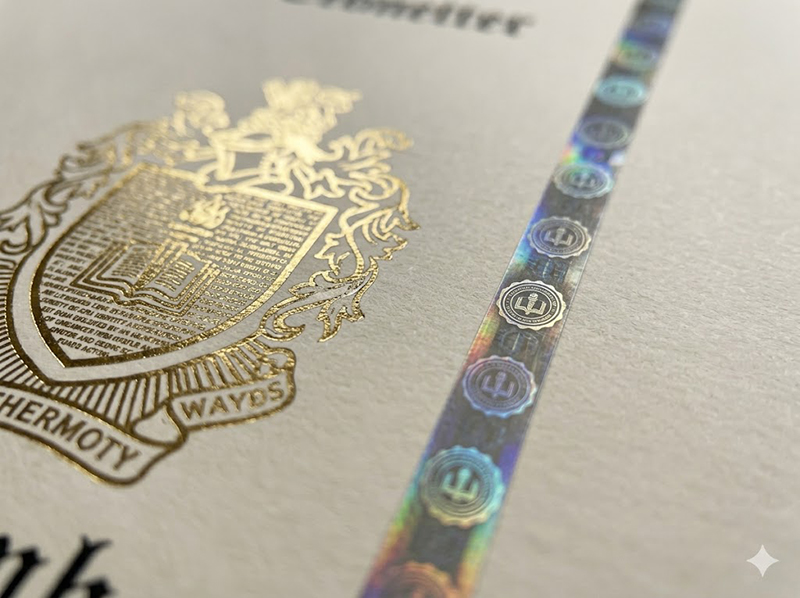
Consequently, the hiring managers—unfamiliar with the nuances of academic policy—viewed the “Proof” with suspicion compared to other candidates’ gold-foiled originals. This “credential discrimination” is a silent hurdle that many graduates face in conservative industries.
The Survival Guide: Protection and Recovery
Since the system is unlikely to change by tomorrow, you must treat your diploma as a non-renewable resource.
1. Immediate Action: The Digital Fortress
The moment you receive your certificate, scan it at 600 DPI. Store this in a secure cloud (Google Drive, iCloud) and an encrypted physical drive. In 2026, a high-resolution scan is often sufficient for initial HR screenings, keeping your original safely tucked away in a moisture-proof safe.
2. The Trap of “Replacement Services”
Searching for “reprint graduation certificate” online often leads to “diploma mills” or “replacement document” services. Avoid these at all costs. * The Risks: These documents lack the verifiable digital signature or holographic thread of the original.
-
The Penalty: Using a “fake” original—even if you actually graduated—is considered document fraud and can lead to immediate termination or legal prosecution.
3. The Legal Path: How to Get a “Proof of Graduation”
If the worst happens, follow the official protocol:
-
Report the loss in a recognized newspaper (if required by your region).
-
Apply through the university’s registrar office.
-
Ensure the “Proof” is cross-referenced with digital platforms like the National Student Clearinghouse or local equivalents (e.g., CHSI/Xuexin).
Conclusion: Adapting to the Rigid System
In conclusion, while the refusal to reissue original diplomas feels like an artifact of a pre-digital age, it is a mechanism designed to protect the “sanctity” of the credential. Therefore, your best strategy is proactive preservation. As we navigate the complexities of the 2026 job market, remember that while your skills define your career, that single piece of paper still guards the gate. Don’t let a “lazy” administrative rule become your professional bottleneck.