
The Language of Prestige: Why Oxbridge Degrees are Latin While US Diplomas Use English
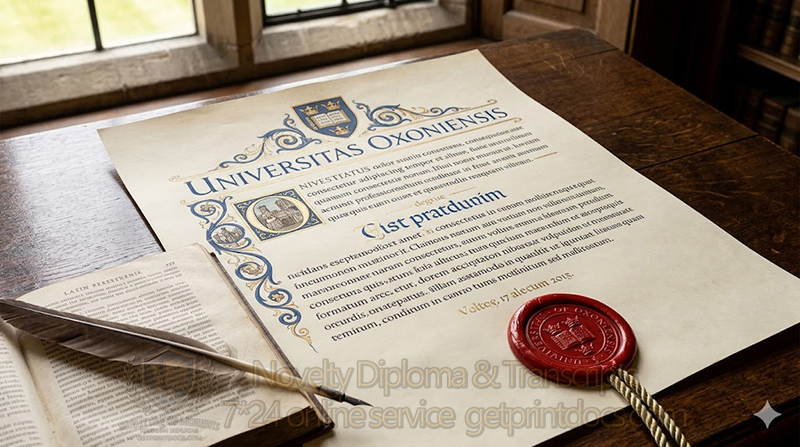
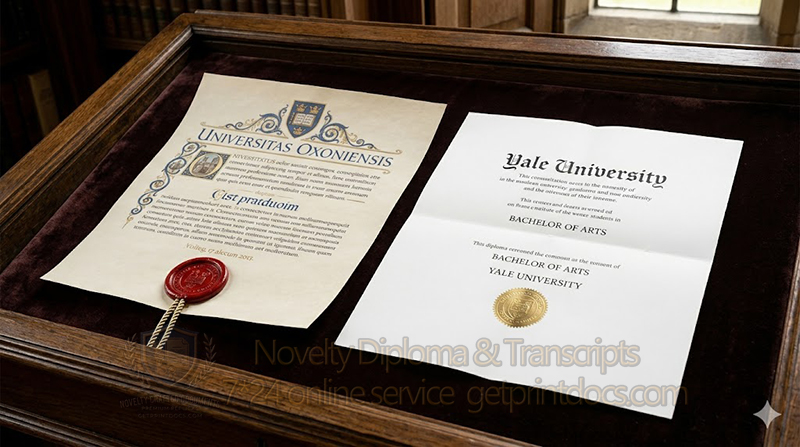
Latin vs English university diplomas,In the hallowed halls of academia, few items carry as much weight as a degree certificate. It is the culmination of years of rigorous study, late-night research, and intellectual growth. However, if you compare a graduate’s scroll from the University of Oxford with one from Harvard or Yale, a striking difference immediately catches the eye. While the American diploma is usually written in clear, modern English, the Oxbridge certificate is often a dense, calligraphic masterpiece written entirely in Latin.
But why does this linguistic divide exist? Is it merely a matter of stubborn tradition, or does it reflect a deeper divergence in educational philosophy? To understand this “fun fact” of the academic world, we must travel back through centuries of history, exploring the evolution of the university itself.
The Roots of the “Lingua Franca”
To grasp why Latin remains the standard for Oxford and Cambridge (collectively known as “Oxbridge”), one must first recognize that for over a thousand years, Latin was not a “dead language”—it was the universal language of knowledge. In medieval Europe, a scholar from Prague could walk into a lecture hall in Paris or Bologna and understand everything perfectly because every academic discourse was conducted in Latin.
A Legacy of the Medieval Church
During the founding years of Oxford (c. 1096) and Cambridge (1209), the church held a monopoly on education. Since the Bible and liturgical rites were in Latin, the universities naturally adopted the tongue. Consequently, granting a degree was seen as a formal ecclesiastical act. Writing the certificate in Latin wasn’t an aesthetic choice; it was a functional necessity for a scholar who might need to prove their credentials across borders.
The Preservation of “Ancient” Authority
Furthermore, Latin carries an inherent sense of “gravitas.” For institutions that pride themselves on being some of the oldest continuous seats of learning in the world, changing the language of a diploma feels like a betrayal of their foundational identity. To an Oxbridge traditionalist, an English certificate lacks the timeless authority that Dominus Illuminatio Mea (the motto of Oxford) provides.
The American Departure: Pragmatism and Democracy
As we cross the Atlantic to the United States, the narrative shifts significantly. While early American institutions like Harvard (founded in 1636) originally followed the Latin tradition, the trend eventually turned toward the vernacular.
The Enlightenment and Accessibility
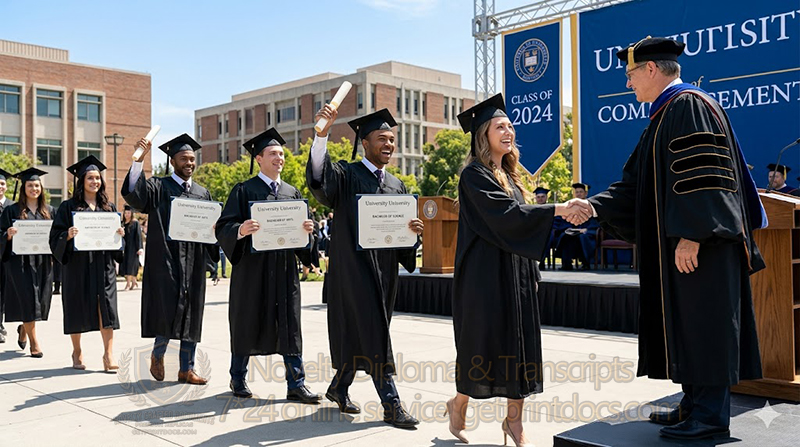
The shift began in earnest during the late 18th and 19th centuries. The United States was a young nation founded on Enlightenment principles and a burgeoning sense of democracy. Educators began to argue that knowledge should be accessible to the “common man,” not just an elite class of Latin-speaking clerics. As a result, the transition to English on diplomas reflected a broader movement to democratize education.
Professionalization of Degrees
Moreover, the rise of land-grant universities and technical colleges in the mid-1800s pushed academic certificates toward practical use. In a rapidly industrializing America, a degree was a credential for employment. Employers needed to be able to read what a candidate had actually studied without hiring a translator. Thus, the “English diploma” became a symbol of American pragmatism.
Key Differences: A Comparative Overview
To better understand the nuances, let’s look at how these two traditions compare in practice today:
| Feature | Oxbridge (UK) | Ivy League / US Standard |
| Primary Language | Latin (mostly) | English (predominantly) |
| Tone | Formal, Ritualistic | Informative, Professional |
| Material | Often Parchment-style | High-quality Paper/Vellum |
| Public Perception | Link to Ancient Heritage | Signifier of Career Readiness |
| Accessibility | Requires Translation for many | Immediately Understandable |
Does the Language Impact Your Career?
In the modern job market, you might wonder if a Latin diploma is a hindrance. Interestingly, the answer is usually no. While a recruiter at a tech startup might be puzzled by a degree that refers to “Artium Baccalaureus” (A.B.) instead of a “Bachelor of Arts” (B.A.), the brand name of the university usually overrides any linguistic confusion.
In fact, the “obscurity” of Latin often adds a layer of mystique and exclusivity. It signals that the holder belongs to an institution that values history as much as innovation. Conversely, the English diplomas of the US emphasize clarity and transparency, aligning with the values of modern corporate culture.
The Modern Compromise
It is worth noting that the lines are blurring. Many American universities, particularly those with deep historical roots like Princeton or Brown, still offer “Latin Versions” of their diplomas for those who want the traditional aesthetic. Meanwhile, some UK universities have begun issuing bilingual certificates or providing a formal English translation alongside the Latin original to satisfy international visa requirements and employer background checks.
Nevertheless, the core distinction remains. The Latin of Oxford and Cambridge serves as a bridge to the past, a reminder that the university is a guardian of a thousand-year-old intellectual flame. The English of the American university is a bridge to the future, focusing on the practical application of knowledge in a globalized world.
Final Thoughts: Tradition vs. Utility
Ultimately, the choice between Latin and English is a reflection of a university’s soul. Whether you prefer the rhythmic, ancient echoes of a Latin scroll or the clear, bold assertions of an English certificate, both serve the same noble purpose: celebrating the achievement of the human mind.
Next time you see a framed degree on a wall, take a closer look. The language used tells a story that goes far beyond the name of the graduate—it tells the story of how education evolved from a sacred ritual into a global industry.