
Diploma vs Transcript: Understanding the 5 Key Differences for Your Career
When you walk across the stage at graduation, you receive more than just a round of applause. You earn a set of documents that represent years of hard work. However, many students and professionals often find themselves confused when an employer or a university asks for their “academic credentials.” Do they want the fancy gold-foiled certificate, or the multi-page list of grades?
Understanding the distinction between a diploma and a transcript is vital for your professional journey in 2026. While both documents validate your education, they serve entirely different purposes in the eyes of recruiters and admissions officers.
In this comprehensive guide, we will break down the essential differences so you can manage your records with confidence.
If you have lost your diploma .degree.transcript.or need a replacement, please click to contact us! We can send it to you within 5-7 days!
1. The Core Definition: Recognition vs. Record
To begin with, let’s define what these documents actually represent.
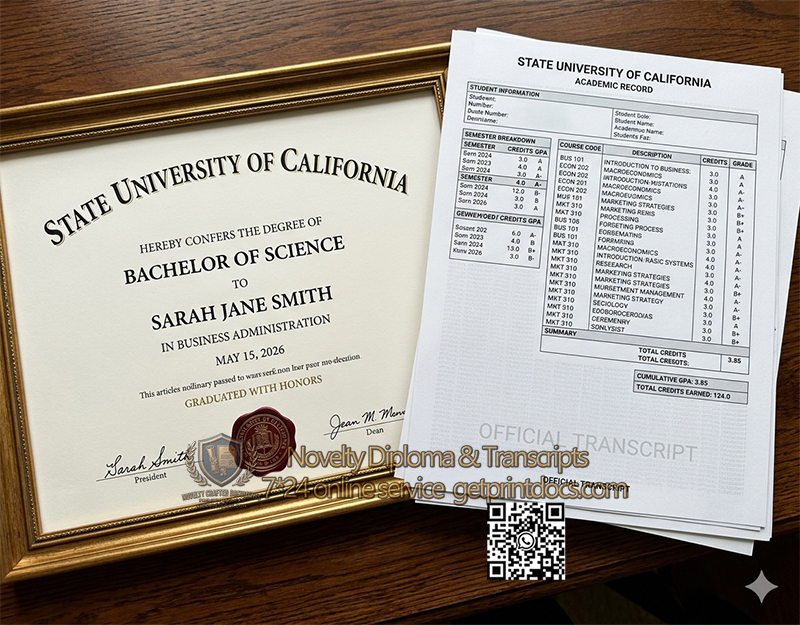
A diploma is a ceremonial document. It is the official certificate issued by an educational institution—such as a high school or university—to confirm that you have successfully completed a specific course of study. Think of it as a badge of honor. It usually features the school’s seal, high-quality parchment, and elegant calligraphy.
On the other hand, a transcript is your functional academic history. It is an exhaustive, line-by-line record of every class you took, the credits you earned, and the grades you achieved. If the diploma is the “headline” of your education, the transcript is the “full story.”
2. Level of Detail: Summary vs. Substance
One of the most significant differences lies in the amount of information provided.
When you look at a diploma, you will see very limited data. Typically, it only displays:
-
Your full name
-
The type of degree (e.g., Bachelor of Science)
-
The major or field of study
-
The date of graduation
-
Official signatures and seals
In contrast, a transcript is dense with data. Beyond your basic identity, a transcript includes your Cumulative GPA, semester-by-hour breakdowns, and even transfer credits from other institutions. For international students in 2026, transcripts are often the only way for foreign agencies to verify if your specific coursework meets their local standards.
3. Primary Purpose: Display vs. Verification
Furthermore, the way you use these documents differs greatly.
Most people use their diploma for aesthetic and symbolic reasons. You frame it and hang it in your office to build trust with clients or to celebrate your achievement. It serves as a quick “proof of degree” for social recognition.
However, when it comes to “hard” verification, the transcript takes center stage. Whether you are applying for a Master’s program or a highly regulated job in engineering or healthcare, organizations will demand your official transcript. They need to see the specific modules you completed to ensure you have the necessary prerequisite knowledge for the role.
Pro Tip: In the modern job market, having high-quality physical copies of both is essential. Even as digital verification grows, many traditional institutions still require a tactile, high-fidelity document for their archives.
4. Frequency of Issuance
Another practical difference involves how often you can get these documents.
Typically, an institution issues only one original diploma at graduation. While you can request a replacement if the original is lost or damaged, it often involves a lengthy administrative process and a fee. Because diplomas are ceremonial, they are treated as unique artifacts.
Transcripts, however, are dynamic and easily accessible. Most universities allow you to order multiple official copies throughout your life. In fact, many professionals keep a few “sealed” copies on hand to speed up job applications or visa processes.
5. Physical Characteristics and Craftsmanship
Lastly, we must consider the physical nature of these records.
A diploma is designed to be beautiful. In 2026, premium diplomas often feature:
-
Gold foil stamping (烫金工艺): For a prestigious, reflective finish.
-
Security textures: Intricate patterns that prevent unauthorized scanning.
-
Heavyweight Parchment: A specific paper feel that denotes authority.
Transcripts are usually more functional in appearance. They are often printed on security paper with “void” pantographs (which show a “VOID” mark if photocopied) to ensure the integrity of the data. While they may not be as “pretty” as a diploma, their security features are much more complex.
Comparison Table: Diploma vs. Transcript at a Glance
| Feature | Diploma | Transcript |
| Primary Goal | Celebrate completion | Document academic performance |
| Information | Name, degree, date | Courses, grades, GPA, credits |
| Visual Style | Ornamental, suitable for framing | Data-heavy, functional |
| Usage | Display and general proof | Admissions and background checks |
| Quantity | Usually one original | Available on demand |
Conclusion: Why You Need Both
In summary, you cannot simply choose one over the other. The diploma proves you reached the finish line, but the transcript explains how you ran the race.
As the global job market becomes more competitive in 2026, maintaining perfect copies of both documents is a smart career move. Whether you are displaying your success on a wall or proving your expertise to a recruiter, understanding these differences ensures you are always prepared.
If you have lost your original documents or need high-quality archival replicas for personal records, always ensure you choose a provider that understands these nuances of texture, security, and layout.
Frequently Asked Questions (FAQ)
Can a transcript replace a diploma?
While a transcript shows you graduated, it is rarely accepted for ceremonial or display purposes. Conversely, a diploma is almost never accepted as a substitute for a detailed grade breakdown.
Do I need an official or unofficial transcript?
For job applications, an unofficial copy may suffice initially. However, for final hiring or university admissions, an “official” version—sealed and stamped—is mandatory.
What should I do if my diploma is damaged?
You should contact your institution’s registrar immediately or look for professional restoration and replica services to maintain your personal archives.