
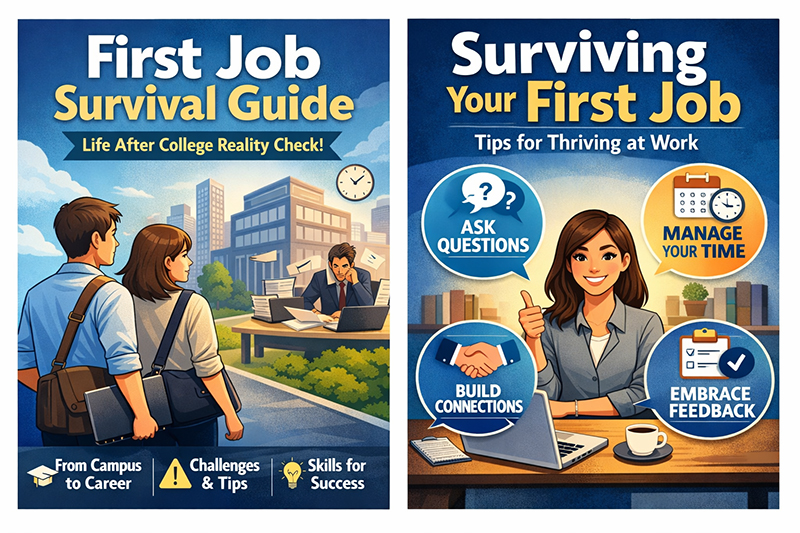
First Job Survival Guide: The Reality Behind Life After College
Graduating from college feels like crossing a finish line. However, in reality, it is just the starting point. Life after college often brings excitement, but it also introduces challenges that many new graduates do not expect.
At first, everything seems new and full of opportunity. Yet, over time, the gap between academic life and professional life becomes clear. Therefore, understanding what lies ahead can make your transition smoother and less stressful.
This first job survival guide will help you adjust quickly, avoid common mistakes, and build a strong foundation for long-term success.How do I obtain a diploma from the University?
The Key Differences Between College and Work Life
Freedom vs Responsibility
In college, schedules are flexible. You can often choose when to study and when to relax. On the other hand, work life follows a fixed structure. You are expected to show up on time and stay productive throughout the day.
Moreover, deadlines in the workplace are not suggestions. They are commitments. Missing them can affect your team, not just your grades.
Individual Effort vs Team Collaboration
At school, most success depends on individual performance. However, in the workplace, teamwork becomes essential.
You will need to communicate clearly, share responsibilities, and support your colleagues. As a result, your ability to work well with others becomes just as important as your technical skills.
Learning vs Delivering Results
In college, learning is the main goal. Mistakes are part of the process. In contrast, companies expect results.
Although learning still matters, employers value efficiency and outcomes. Therefore, you must balance learning quickly while delivering quality work.
Common Challenges in Your First Job
Feeling Overwhelmed
At the beginning, everything may feel confusing. New systems, new expectations, and new people can create pressure.
However, this is completely normal. Most new employees go through this phase. With time, things will become clearer.
Imposter Syndrome
Many graduates feel they are not good enough. Even if you were a top student, work can make you doubt yourself.
Still, it is important to remember that you were hired for a reason. Therefore, trust your abilities and focus on gradual improvement.
Communication Gaps
In college, communication is often casual. In contrast, workplace communication requires clarity and professionalism.
For example, emails should be structured and concise. Meetings require preparation. Thus, improving communication skills early can give you an advantage.
Essential Skills for First Job Success
Time Management
Managing your time effectively is crucial. Unlike school, tasks may not have clear instructions.
Therefore, you should prioritize tasks, set deadlines, and avoid procrastination. Simple tools like to-do lists can make a big difference.
Adaptability
Work environments change quickly. New tools, new projects, and new expectations are common.
As a result, being flexible helps you stay relevant and valuable. Instead of resisting change, try to learn from it.
Professional Communication
Clear communication reduces mistakes. It also builds trust with your team.
For instance, always confirm tasks, ask questions when needed, and provide updates regularly. This shows reliability and professionalism.
Problem-Solving Mindset
Employers appreciate employees who can solve problems independently.
Before asking for help, try to find possible solutions. Then, present your ideas. This approach shows initiative and critical thinking.
Practical Tips to Survive and Thrive
Ask Questions Early
At the start, it is better to ask questions than to make assumptions. Although you may feel hesitant, asking shows willingness to learn.
Build Relationships
Work is not only about tasks. It is also about people.
Therefore, take time to connect with colleagues. Simple conversations can build trust and improve collaboration.
Accept Feedback Positively
Feedback can feel uncomfortable. However, it is one of the fastest ways to grow.
Instead of taking it personally, focus on improvement. Over time, this mindset will help you stand out.
Stay Organized
Keeping track of tasks, deadlines, and notes can prevent stress.
For example, using digital tools or planners can help you stay in control of your workload.
Long-Term Growth Strategies
Keep Learning
Even after graduation, learning should not stop.
You can take online courses, read industry articles, or learn from experienced colleagues. Continuous learning keeps you competitive.
Set Career Goals
Without clear goals, it is easy to feel lost.
Therefore, think about where you want to be in one year or five years. Then, align your daily work with those goals.
Build a Personal Brand
Your reputation matters. Being reliable, proactive, and positive can help you build a strong professional image.
Over time, this can lead to better opportunities and career growth.
Final Thoughts: Turning Your First Job Into a Strong Start
Life after college is not always easy. In fact, it can be challenging and unpredictable. However, it is also full of opportunities.
By understanding the differences, developing key skills, and maintaining a positive mindset, you can turn your first job into a powerful stepping stone.
In the end, success does not come overnight. Instead, it comes from consistent effort, learning, and growth.
So, take it one step at a time. Your career journey has just begun.