
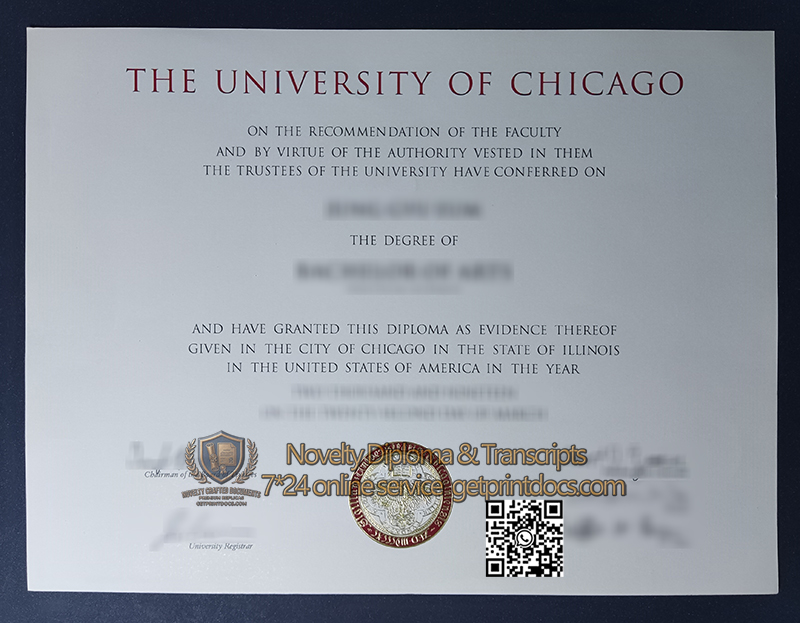
Understanding the Value of a University of Chicago Diploma
Few institutions command as much respect as the University of Chicago. Located in the historic Hyde Park neighborhood, this university has built a reputation for intellectual rigor and groundbreaking research. A University of Chicago diploma represents more than just graduation. It signals that the holder has endured one of the most demanding academic environments in the world.
For alumni and professionals alike, the physical proof of this achievement holds tremendous value. Whether you need a replacement for a lost document or simply want a backup for your records, understanding what makes this institution unique is essential.
A Legacy of Academic Excellence
The University of Chicago opened its doors in 1890. From the very beginning, it set out to redefine higher education. The university operates on a distinctive principle: inquiry-driven learning. Students do not simply memorize facts. Instead, they learn how to ask the right questions.
This approach has produced remarkable results. The university counts over 100 Nobel laureates among its faculty, alumni, and researchers. Moreover, it is home to the first nuclear reaction, which took place on campus during the Manhattan Project.
What sets UChicago apart is its commitment to free expression and rigorous debate. The Core Curriculum remains a cornerstone of the undergraduate experience. Every student, regardless of major, must engage with foundational texts in humanities, social sciences, and physical sciences. As a result, graduates think critically and communicate clearly.
Key Academic Programs and Specialties
The university offers a wide range of programs across its undergraduate college and graduate schools. However, several areas stand out for their global recognition and career outcomes.
-
Economics: The University of Chicago has become synonymous with economics. The Chicago School of Economics revolutionized the field. In fact, it has produced more than 30 Nobel Prize winners in economics alone. Graduates from this program are highly sought after by investment banks, consulting firms, and government agencies. The analytical skills they develop here translate directly to high-paying roles.
-
Law School: The University of Chicago Law School ranks among the top five in the nation. It stands out for its interdisciplinary approach. Students study law alongside economics, philosophy, and political science. This prepares them for careers in top law firms, federal clerkships, and public service. Employment rates for graduates consistently exceed 95% within ten months of graduation.
-
Booth School of Business: The MBA program at Booth enjoys worldwide recognition. It emphasizes analytical rigor and a flexible curriculum. Graduates frequently secure roles at top consulting firms like McKinsey and BCG, as well as leading investment banks and tech companies. Furthermore, the average starting salary for Booth graduates regularly surpasses $175,000.
-
Political Science and Public Policy: Given its location and history, UChicago excels in political theory and public policy. Alumni often pursue careers in government, non-profits, and international organizations. The Harris School of Public Policy offers specialized training in data-driven policy analysis, making graduates highly competitive for roles in Washington D.C. and beyond.
-
Biological Sciences and Medicine: The Pritzker School of Medicine ranks among the most selective medical schools in the country. Research opportunities abound. Students and faculty collaborate on cutting-edge work in genetics, neuroscience, and cancer research. Additionally, medical school graduates match into top residency programs nationwide.
Career Outcomes and Professional Trajectory
A University of Chicago diploma opens doors that remain closed to most graduates. Employers understand exactly what this credential represents: intellectual discipline, problem-solving ability, and a strong work ethic.
For undergraduate students, the career outcomes look impressive. Within six months of graduation, over 90% of UChicago graduates find employment, enroll in graduate school, or accept a fellowship. Top employers include Goldman Sachs, Google, Microsoft, and the U.S. government.
For graduate and professional school graduates, the outcomes look even more striking. Law school graduates secure clerkships at the Supreme Court level. Business school alumni move into C-suite positions. Economics graduates often receive recruitment offers before they even finish their final semester.
The university’s alumni network also serves as a significant asset. With over 200,000 living alumni spread across the globe, connections run deep. This network provides mentorship, job referrals, and professional opportunities that can accelerate a career by years.
The Importance of the Physical Credential
While the degree itself holds academic weight, the physical diploma serves a distinct purpose. It provides the official proof that employers and graduate schools need for verification.
In many industries, background checks are standard. When you accept a new job offer, human resources will request documentation of your highest degree. Without a clear copy of your University of Chicago diploma, this process can become complicated. Delays in verification can sometimes push back start dates or create unnecessary stress.
Additionally, the diploma plays a key role in licensing for certain professions. Lawyers, doctors, and clinical psychologists must provide proof of their degree when applying for state licenses. If the original document goes missing or sustains damage, obtaining a replacement or a verified replica becomes a priority.
There is also a personal dimension. Graduating from UChicago represents a monumental achievement. The diploma serves as a symbol of years of sacrifice, late nights in the library, and intellectual growth. Displaying it in a home office or professional workspace offers a daily reminder of what becomes possible through dedication and focus.
Diplomas vs. Degrees: Understanding the Difference
People often use the terms “diploma” and “degree” interchangeably. However, they refer to two different things. Knowing the distinction can help, especially if you are trying to replace or replicate your academic documentation.
A degree is the academic title you earn. It represents the knowledge, skills, and qualifications you gained. For example, a graduate earns a Juris Doctor from the Law School or a Bachelor of Arts in Economics. This is your official academic status, and the university permanently records it on your transcript.
A diploma, on the other hand, is the physical document that confirms your degree. It is the certificate printed on archival paper. It includes the university seal, the signatures of the president and the registrar, and your full name. In essence, it serves as a tangible representation of your achievement.
To put it simply:
-
Degree: The credential (e.g., MBA, PhD, JD).
-
Diploma: The physical document that proves you earned the credential.
Sometimes, graduates find themselves with the degree on record but without the physical diploma. Perhaps it went missing during a move, suffered water damage, or never made it into a frame. In these situations, the degree remains valid, but having a proper physical representation of it becomes essential for display and verification purposes.
Securing a Quality Representation
Requesting a replacement from the university registrar often involves a slow process. Many institutions take weeks or even months to process reprint requests. For professionals who need their credentials immediately, this timeline does not always work.
A high-quality replica offers a practical solution. It allows you to present your educational background confidently during interviews or networking events. Moreover, it provides a backup while you wait for an official reprint from the university.
When seeking a replica, accuracy matters. Every detail must align with the original specifications. This includes the specific font style, the placement of the university seal, and the exact wording of the degree. Whether you graduated in 1985 or 2020, the design elements should match the era of your graduation.
Final Thoughts
A University of Chicago diploma carries weight that few other credentials can match. It represents a commitment to intellectual excellence and a willingness to push beyond conventional boundaries. Whether you studied economics, law, business, or the humanities, your achievement deserves proper representation.
If your original diploma has gone missing, sustained damage, or simply needs a backup, securing a precise replica allows you to maintain your professional image. By understanding the difference between the degree you earned and the diploma that represents it, you can make an informed choice.
Your academic accomplishments form a cornerstone of your professional identity. Ensure they are always ready for presentation, whether on your office wall or in your career portfolio. With the right attention to detail, your credentials will continue to serve you well for years to come.